
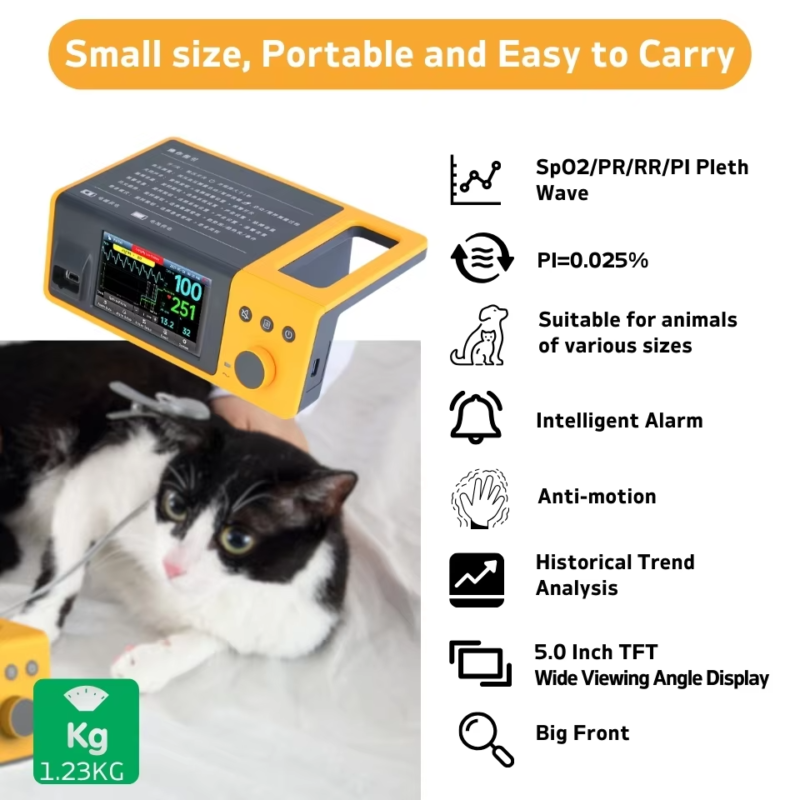
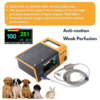
Benchtop veterinary monitor reading SpO₂, pulse rate, respiration rate and perfusion index down to PI 0.025% on moving patients.
Product Overview
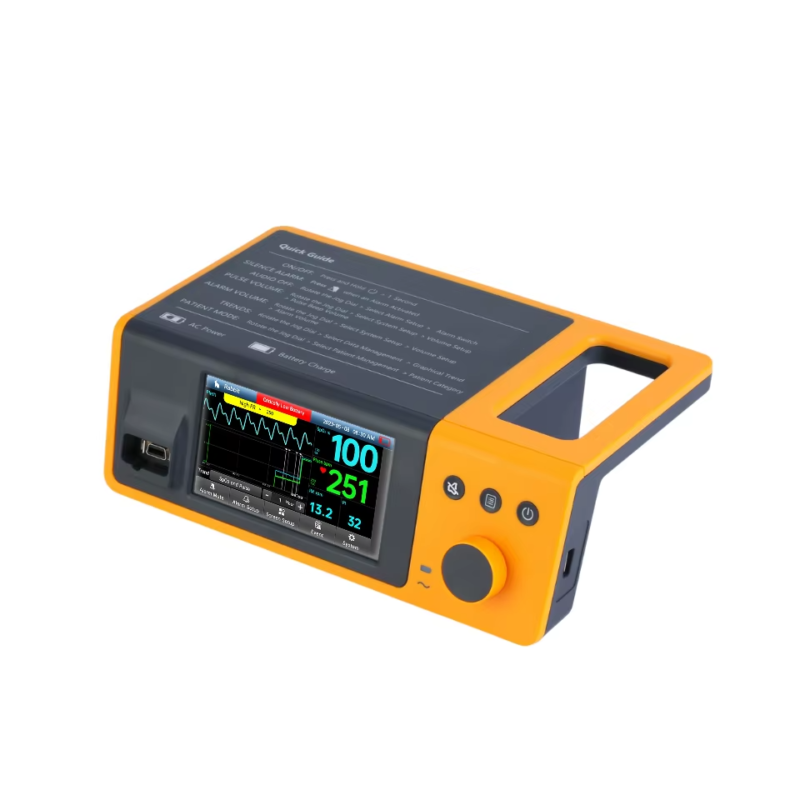
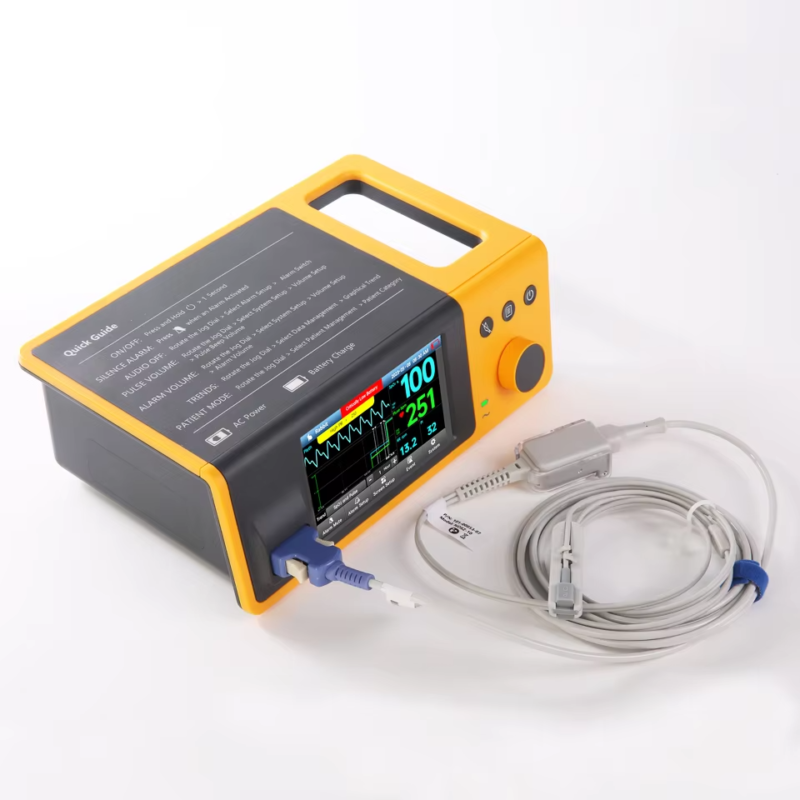
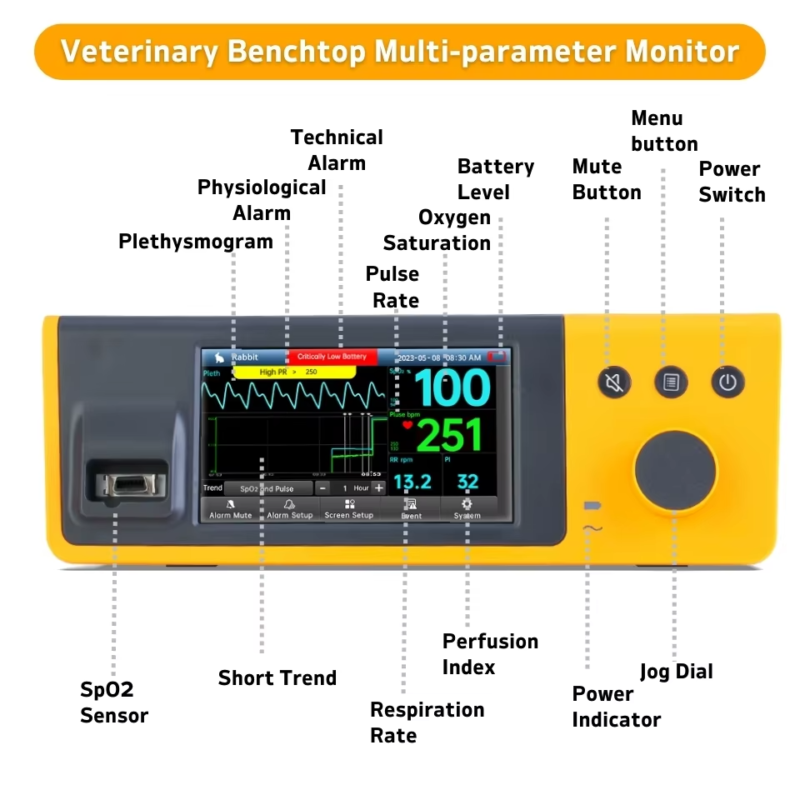
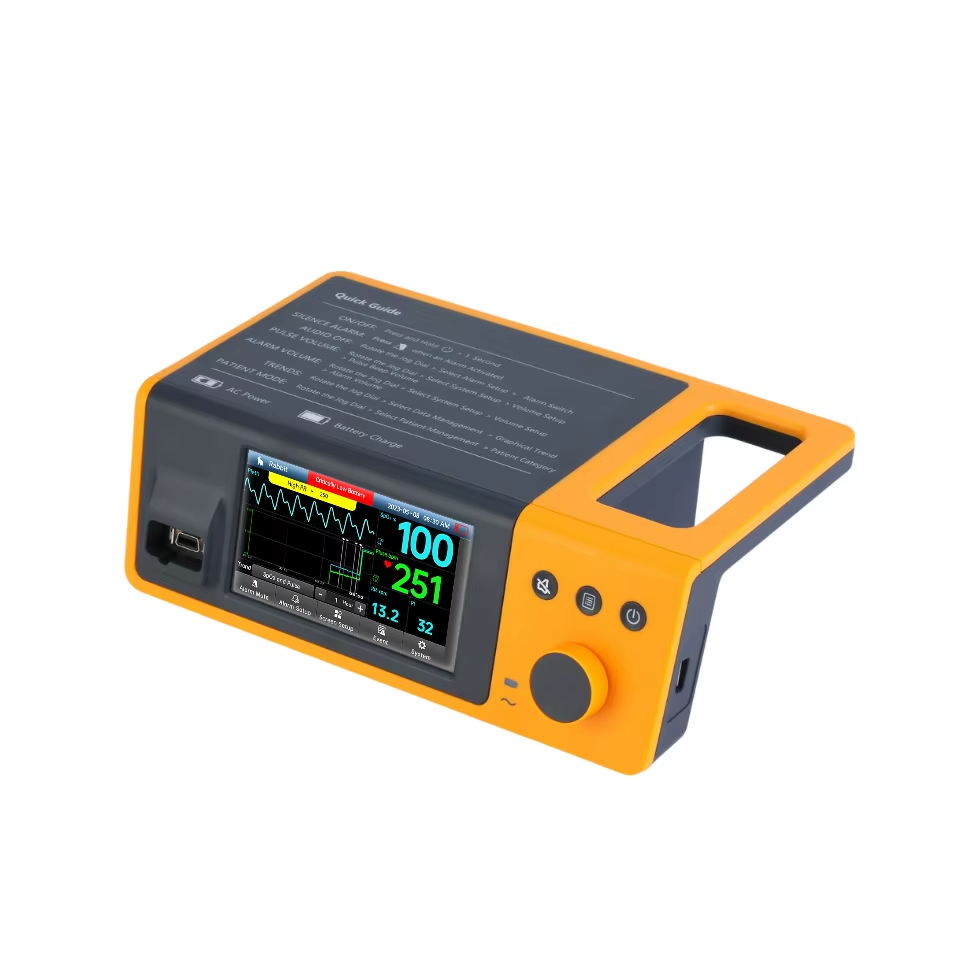
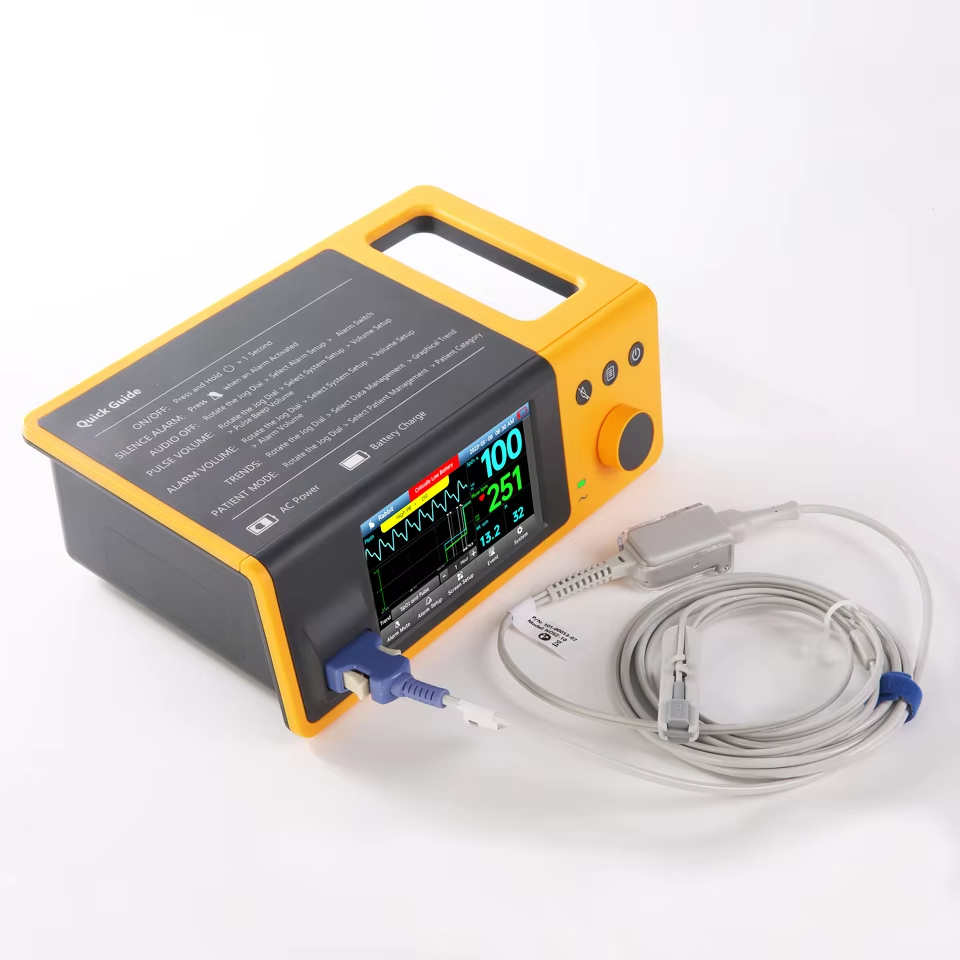
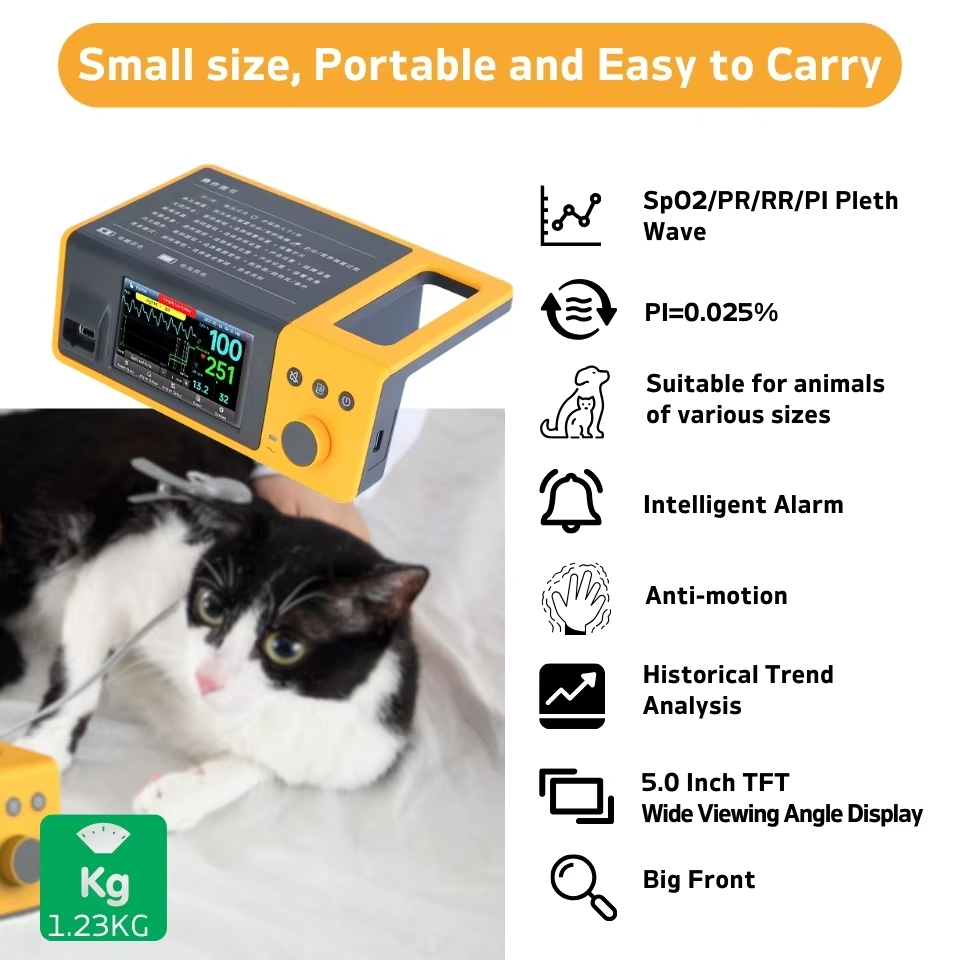
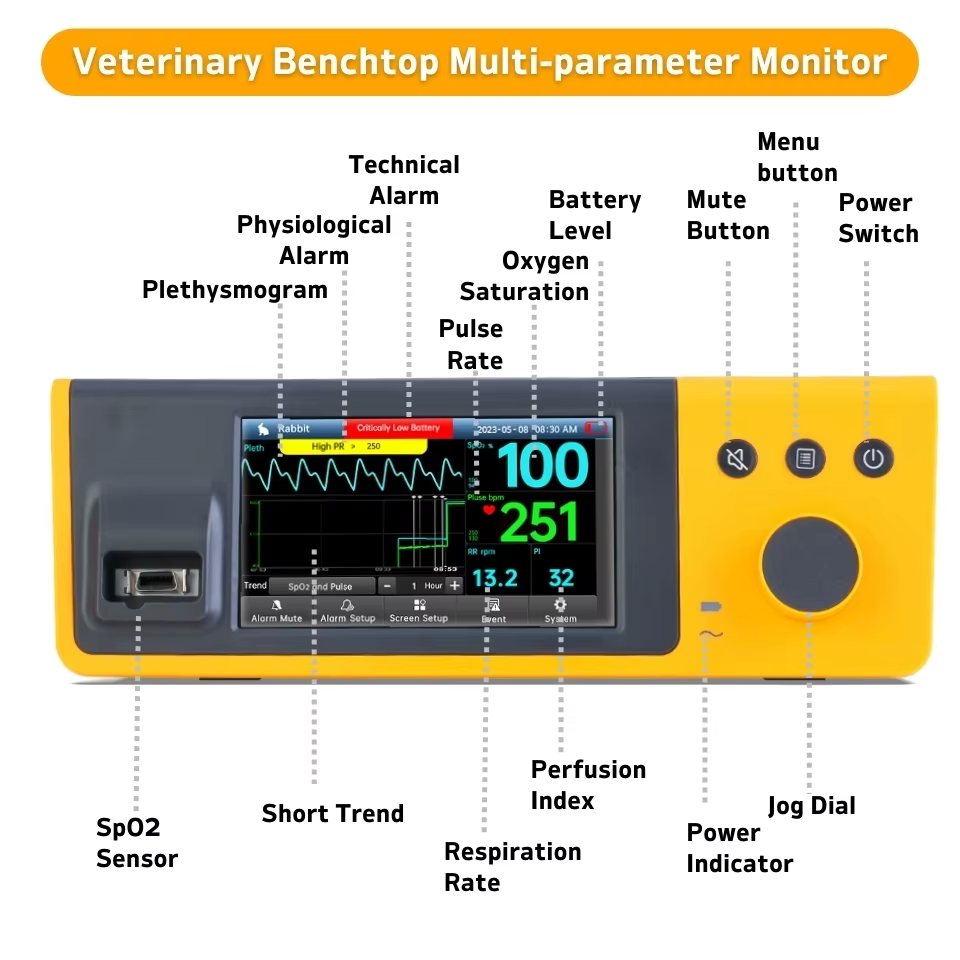
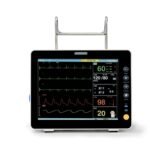
The VM30 is a benchtop monitor for oxygenation and pulse monitoring across the working day — premedication, induction, recovery and ward observation. It displays SpO₂, pulse rate, respiration rate, perfusion index and the plethysmogram on a 5.0-inch colour TFT screen, with a short trend beside the numerics.
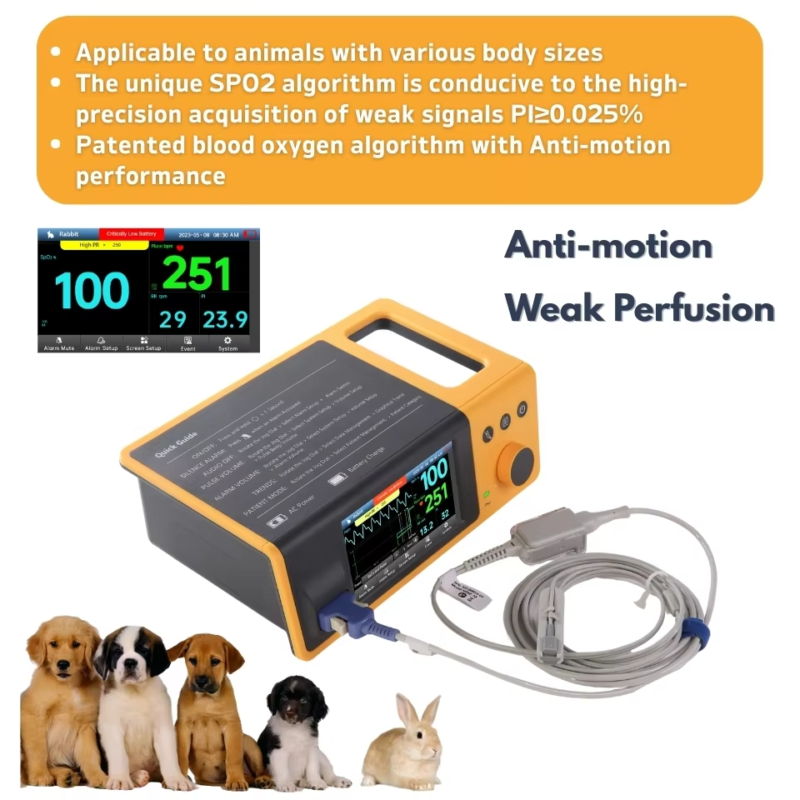
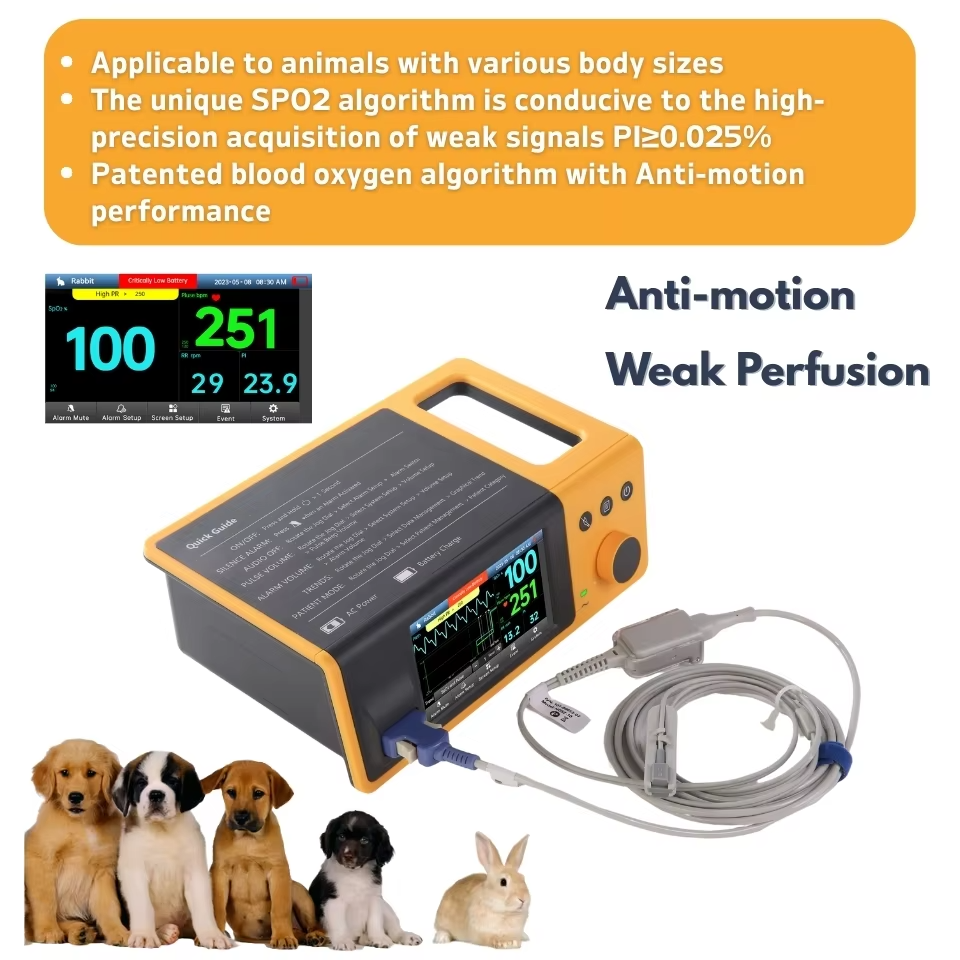
Two design points decide whether a veterinary oximeter is usable in practice: whether it holds a reading on a weak signal, and whether it holds it on a moving patient. The VM30 is specified to acquire down to a perfusion index of 0.025% and carries an anti-motion algorithm for both.
Key Features
- SpO₂, pulse rate, respiration rate and perfusion index with plethysmogram waveform on one screen
- Weak-perfusion acquisition down to PI 0.025% — holds a reading on cold, hypotensive or vasoconstricted patients
- Anti-motion algorithm — reading survives shivering, panting and handling instead of dropping to a dash
- Covers body sizes from rabbit to large canine, with patient-mode presets by species
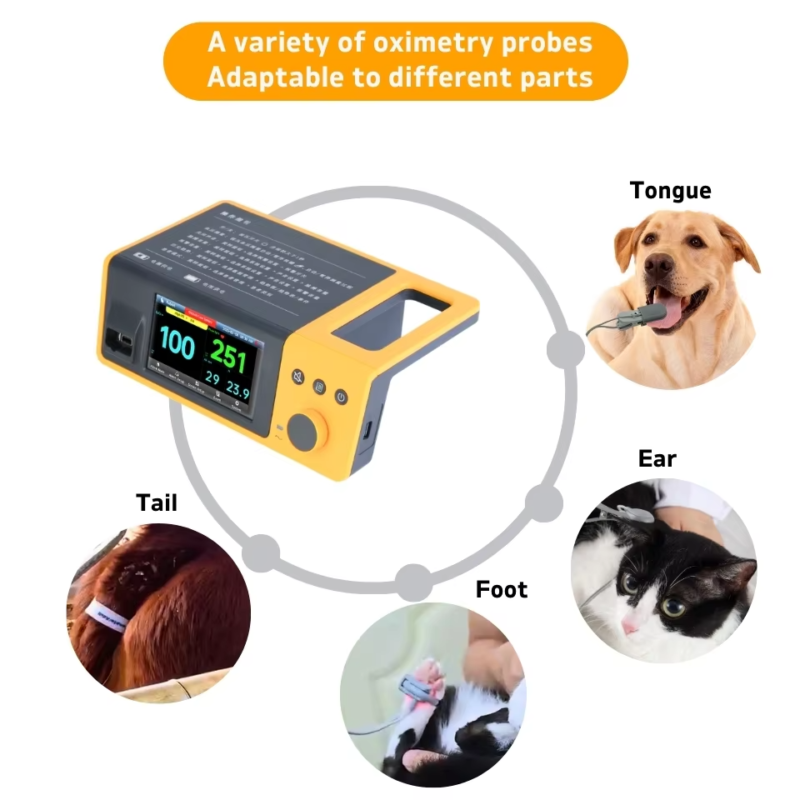
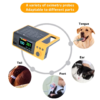
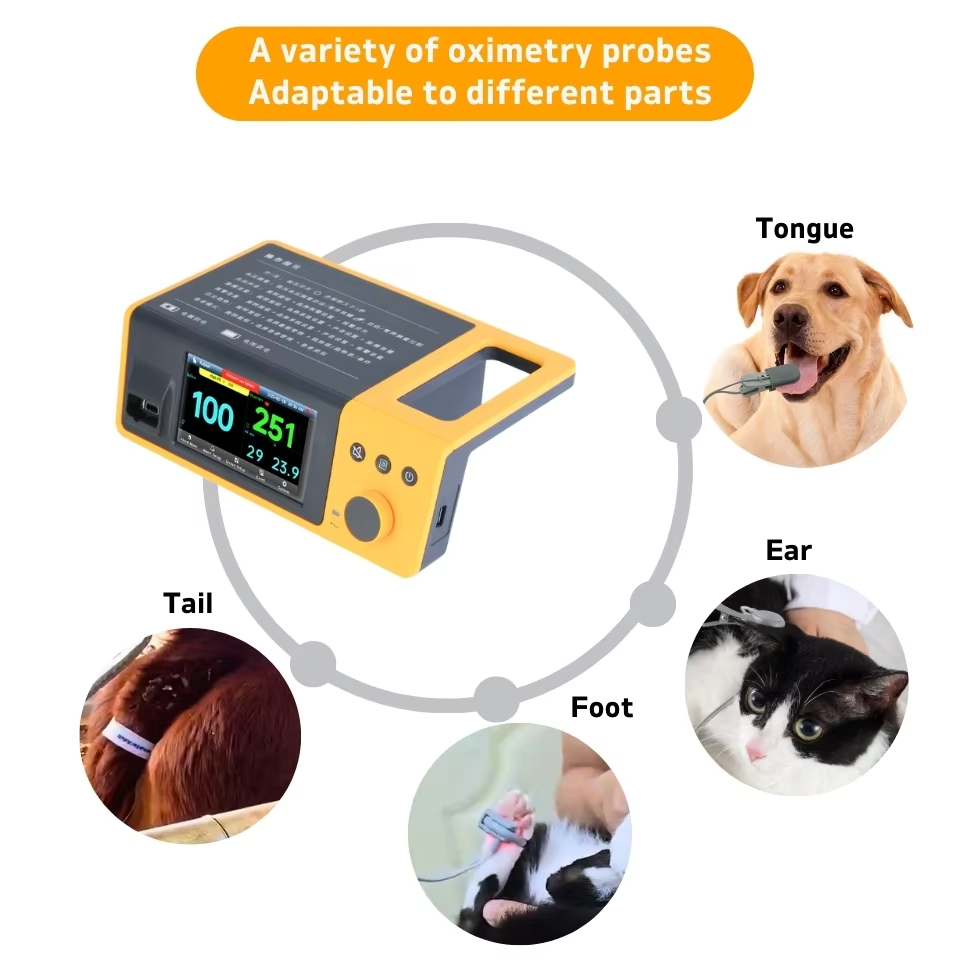
- Probe range for different sites — tongue, ear, foot and tail
- 5.0-inch wide-viewing-angle TFT with large numerics — readable across the prep room
- Physiological and technical alarms shown separately, with alarm mute on a dedicated key
- Short trend on the main screen plus historical trend analysis for review
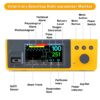
- Jog dial for all menu navigation — one-handed operation while the other hand stays on the patient
- Mains and internal battery operation, with AC and charge indicators on the front
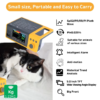
- 1.23 kg with a moulded handle — moves between prep, theatre and ward
- Operating summary printed on the top panel — key functions available without the manual
Visual Evidence
Technical Specifications
| Model | VM30 |
| Configuration | Benchtop veterinary multi-parameter monitor |
| Parameters | SpO₂, pulse rate (PR), respiration rate (RR), perfusion index (PI), plethysmogram |
| Display | 5.0-inch colour TFT, wide viewing angle, large-numeric layout |
| Low perfusion performance | Acquisition down to PI 0.025% |
| Motion tolerance | Anti-motion algorithm |
| Alarms | Physiological and technical alarms, displayed separately; dedicated alarm mute key |
| Trends | Short trend on the main screen; historical trend analysis |
| Patient modes | Species presets selectable by body size |
| Probe sites | Tongue, ear, foot, tail |
| Controls | Jog dial, alarm mute key, menu key, power key |
| Power | AC mains with internal rechargeable battery; AC and charge indicators on the front panel |
| Net weight | 1.23 kg |
| SpO₂ measurement range / accuracy | [TBC] |
| Pulse rate range / accuracy | [TBC] |
| Respiration rate range | [TBC] |
| Battery run time | [TBC] |
| Dimensions | [TBC] |
| Trend storage capacity | [TBC] |
| Data output / connectivity | [TBC] |
Clinical Applications
- Premedication and induction monitoring in canine and feline patients
- Intra-operative oxygenation and pulse monitoring for routine surgical procedures
- Recovery monitoring, where motion artefact is highest and a reading is most often lost
- Ward and kennel observation of respiratory and cardiac cases
- Exotic and small mammal patients, where perfusion is low and probe site choice matters
- Sedated procedures — imaging, dentistry, wound management
Workflow Notes
- Select the patient mode for the species and body size before the probe is applied — alarm limits follow the preset
- Choose the probe site by perfusion, not convenience: tongue under anaesthesia, ear or foot in a conscious patient, tail where the coat blocks other sites
- Clip or wet the coat at the probe site on heavily coated patients; the anti-motion algorithm compensates for movement, not for an optical path blocked by hair
- Run on mains where possible and keep the battery for transfers — the front panel shows AC and charge state
- Reusable sensors are consumable items; hold a spare of each site type in stock
Package Contents
- VM30 main unit
- Reusable SpO₂ sensor with extension cable
- Power supply
- User manual
Probe types and quantities supplied vary by configuration — confirm at order.
Downloads & Documentation
Why Choose VM30
- PI 0.025% acquisition and anti-motion processing address the two failures that make a veterinary oximeter useless — weak signal and a moving patient
- Four parameters plus pleth on one 5.0-inch screen — oxygenation, pulse, respiration and perfusion read at a glance from across the prep room
- Probe range across tongue, ear, foot and tail covers rabbit through large canine on one monitor rather than one machine per patient size
- 1.23 kg with a handle and internal battery — the monitor follows the patient from prep to theatre to recovery
Warranty & Support
FAQ
Will it hold a reading on a hypotensive or hypothermic patient? It is specified to acquire down to a perfusion index of 0.025%, which is the low-perfusion case. Probe site still matters — move to the tongue if an extremity site drops out.
Does it measure blood pressure or ECG? No. The VM30 measures SpO₂, pulse rate, respiration rate and perfusion index with the plethysmogram. For NIBP, ECG, temperature or capnography, use a full multi-parameter monitor.
Which probe for which patient? Tongue under anaesthesia, ear or foot in a conscious patient, tail where the coat blocks other sites. Probes are selected by site, not by species.
Can it be used on rabbits and small mammals? Yes. Patient-mode presets cover body sizes from rabbit upward, and the low-perfusion specification is what makes small exotic patients readable.
Does it run on battery? Yes. It runs from mains with an internal rechargeable battery, and shows AC and charge state on the front panel. Run time per charge is to be confirmed with the supplier.
Reviews
There are no reviews yet.