
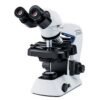
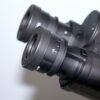
Olympus CX23 binocular biological microscope — plan achromat optics and FN20 field of view for routine veterinary cytology, haematology and parasitology.
Product Overview
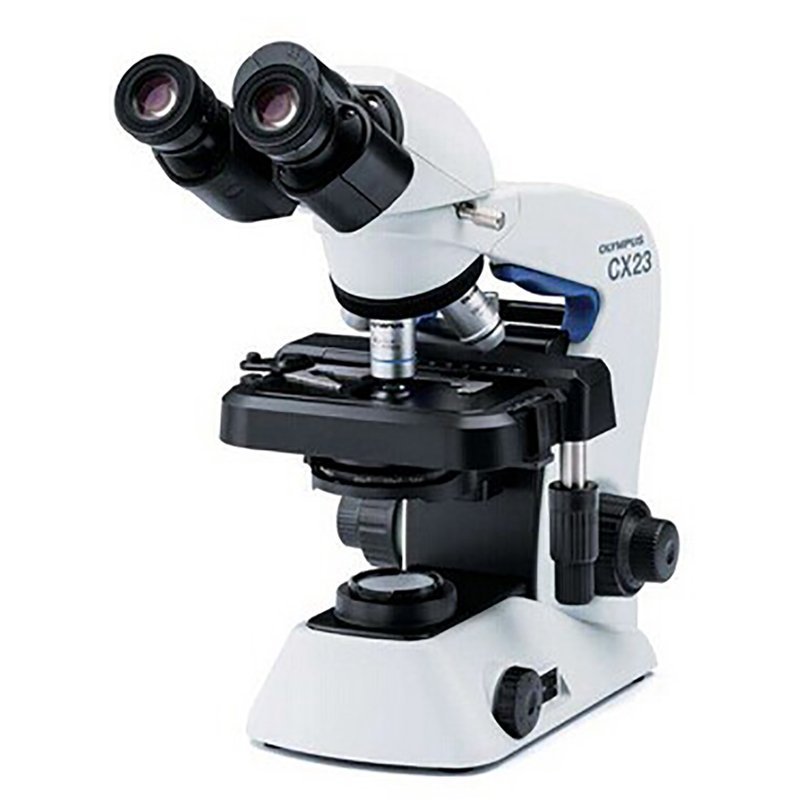
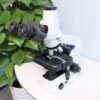
The CX23 is Olympus’s routine clinical microscope, built around an infinity optical system with plan achromat objectives and FN20 eyepieces. It covers the daily slide work of a small animal practice — cytology, blood smears, urine sediment, faecal flotation and skin scrapings — on a 5.9 kg die-cast frame that moves between consulting rooms without recalibration.
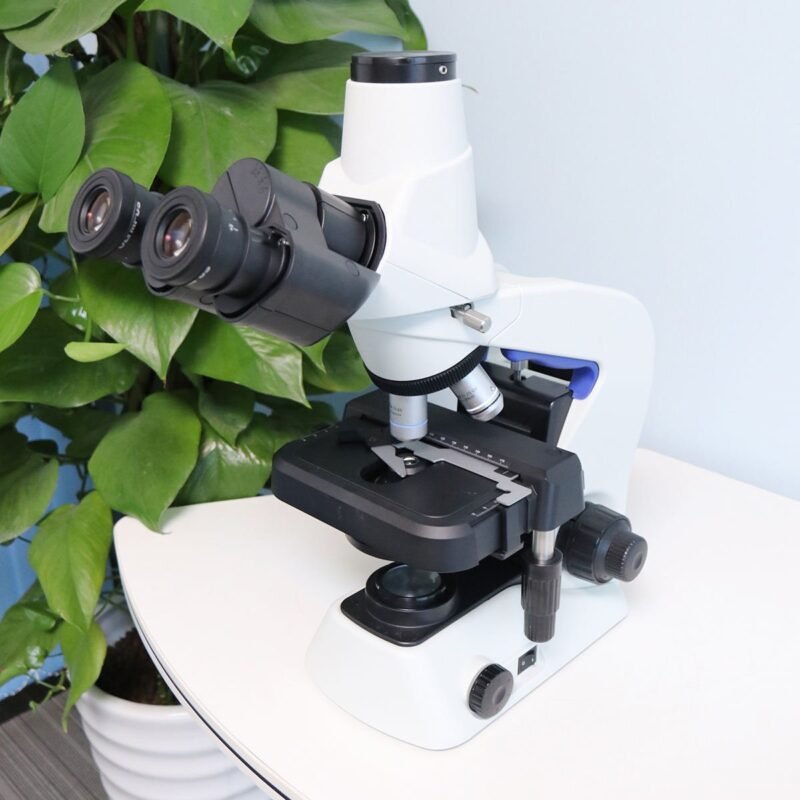
Supplied as the binocular CX23LEDRF. A trinocular version with a camera port is listed separately for practices that document findings or send images for referral.
Key Features
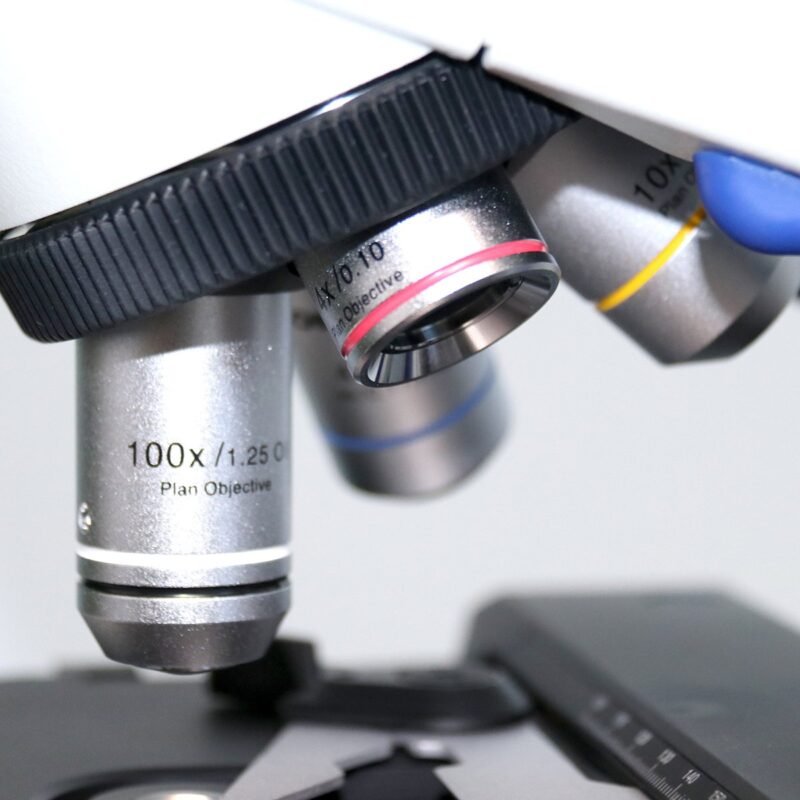
- Plan achromat objectives as standard (4×/10×/40×/100× oil) — image stays flat across the full field, no centre-only focus
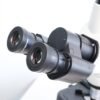
- Field number 20 eyepieces — wider field than FN18 optics, fewer passes to scan a smear
- Infinity optical system on an aluminium die-cast frame with protective plastic covering
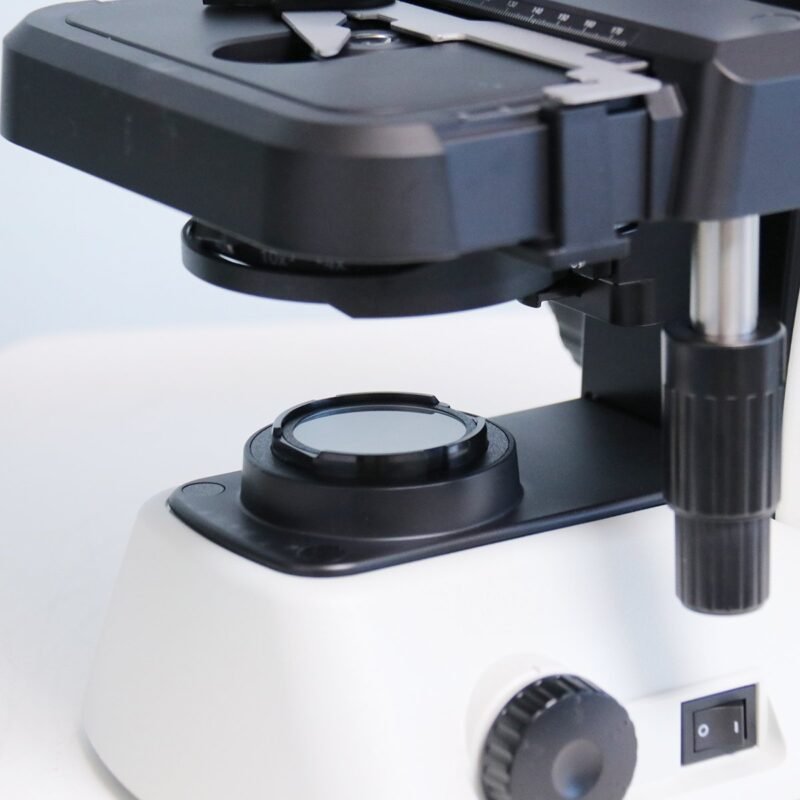
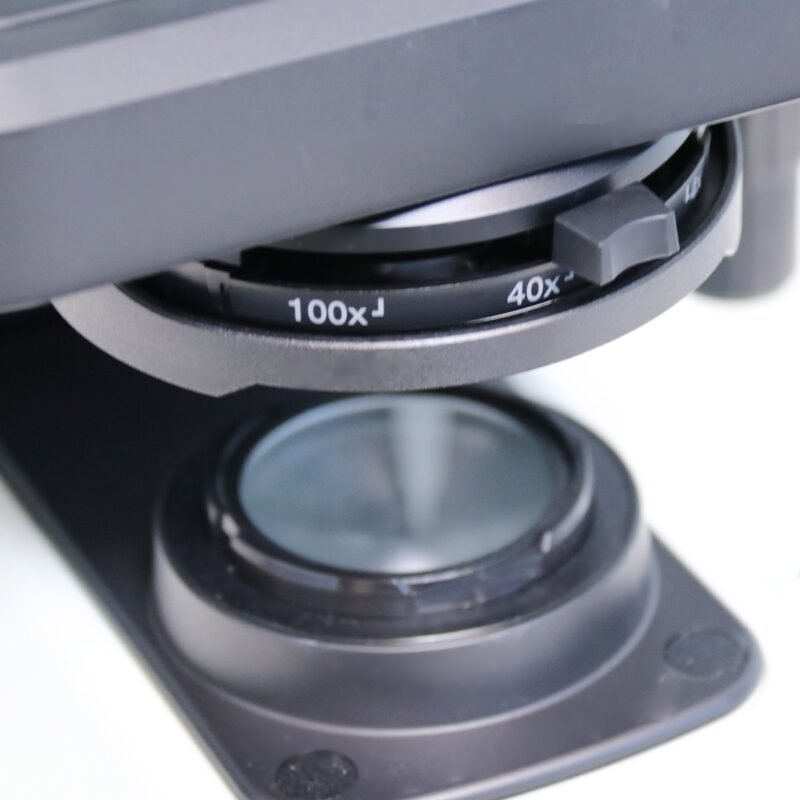
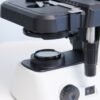
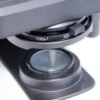
- Abbe condenser NA 1.25 with oil immersion and built-in aperture iris for contrast control
- LED illumination at 0.5 W, 20,000-hour rated life and daylight-balanced colour — holds true colour on H&E and Diff-Quik stains
- Coaxial coarse / fine focus, 15 mm coarse stroke, 2.5 µm minimum fine graduation, with focus lock and torque adjustment
- Torque release on the coarse and stage knobs limits damage if excess force is applied
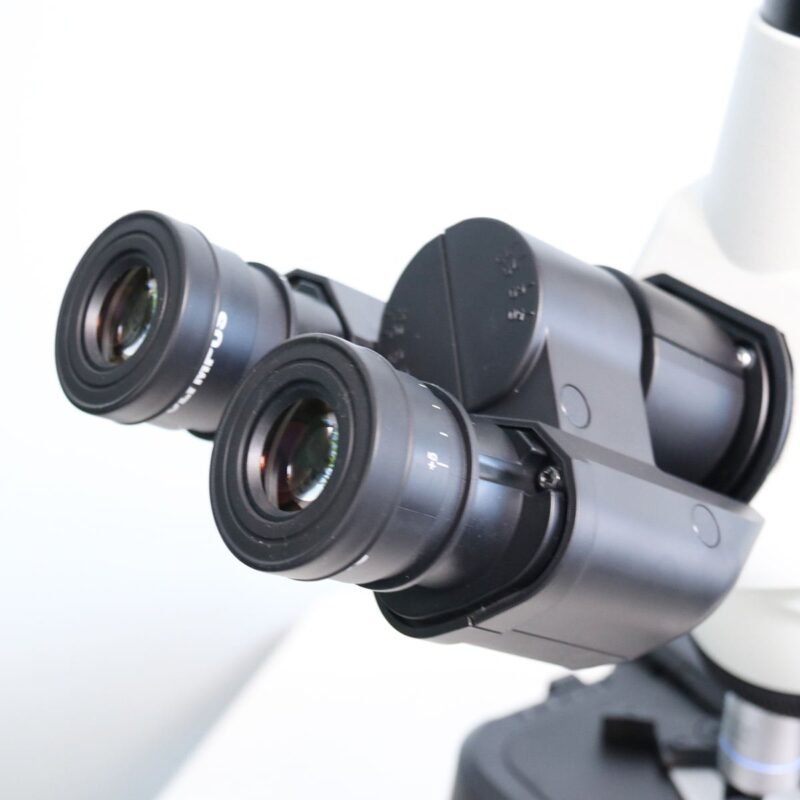
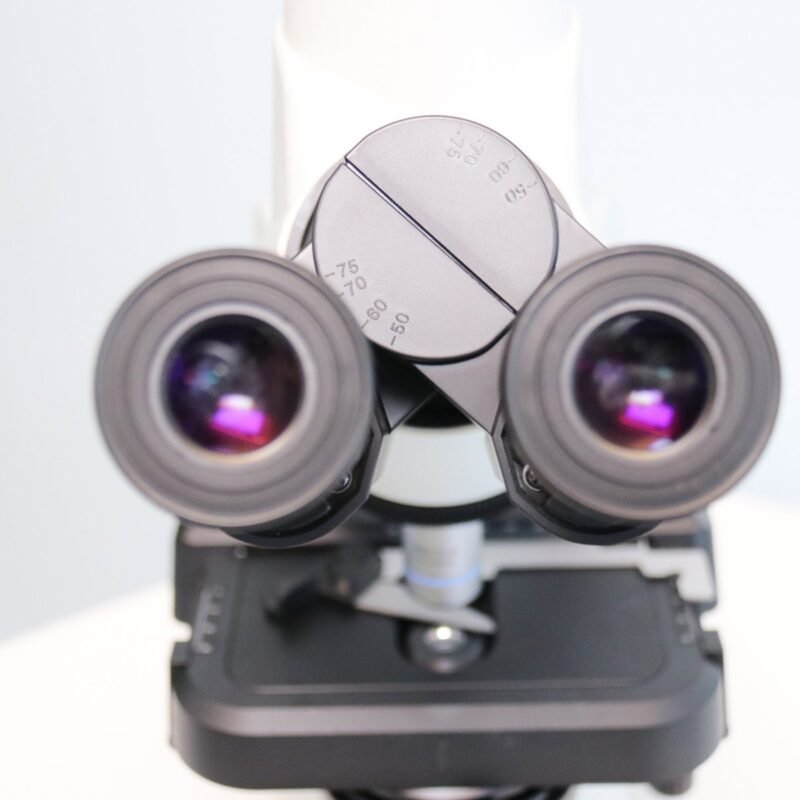
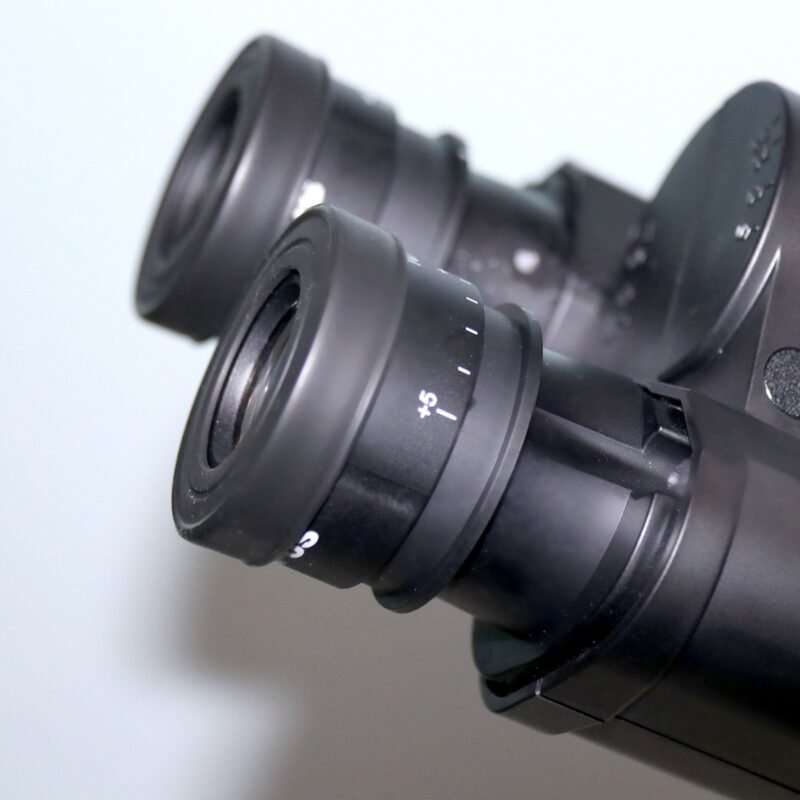
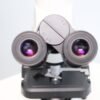
- Binocular tube 30° inclined, interpupillary distance 48–75 mm, left and right diopter adjustment
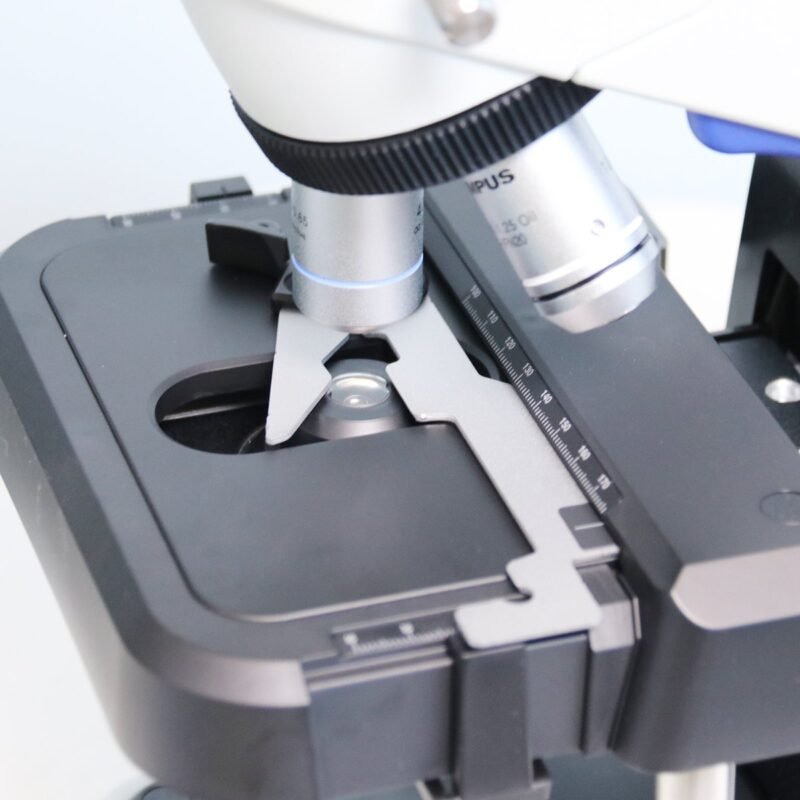
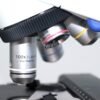
- Inward-tilting quadruple nosepiece — clears working space above the stage for slide changes and oiling
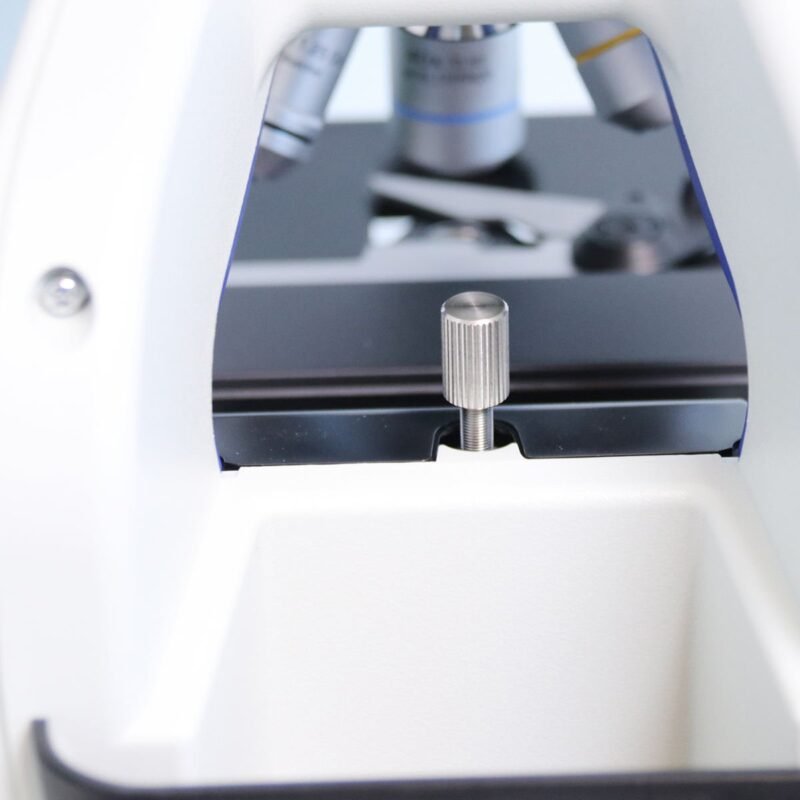
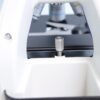
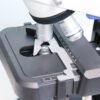
- Rackless mechanical stage, 76 × 30 mm travel, with specimen holder and position scale
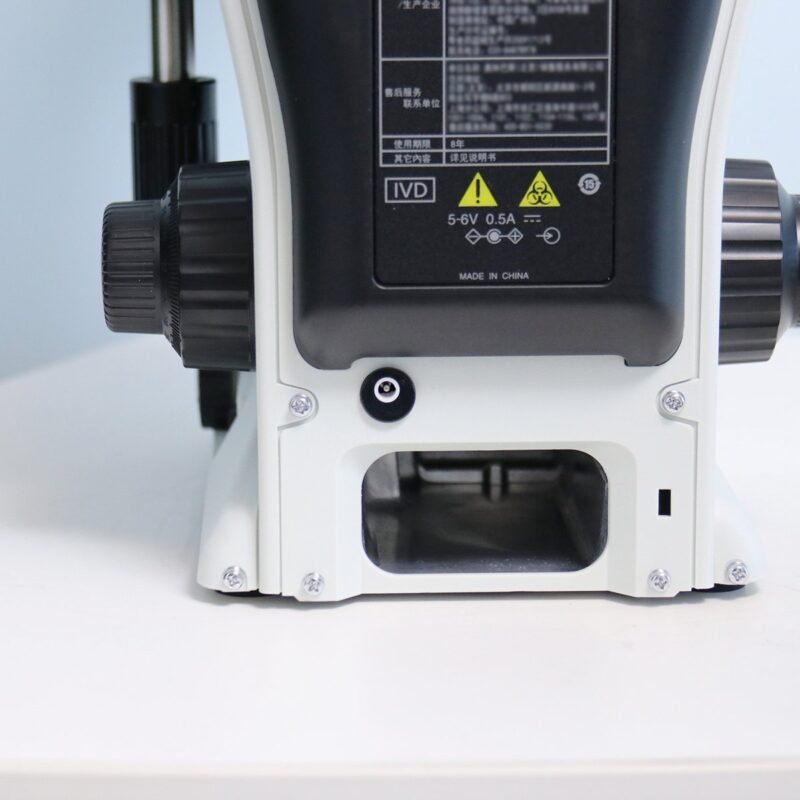
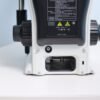
- 5.9 kg with ergonomic grips and cable storage — movable between consulting rooms
Technical Specifications
| Brand | Olympus (Japan) |
| Model | CX23LEDRF (binocular) |
| Optical system | Infinity optical system |
| Observation tube | Binocular, anti-fungal, 30° inclined; interpupillary distance 48–75 mm |
| Eyepieces | 10× anti-fungal, field number (FN) 20; eyepoint 370.0–432.9 mm |
| Objectives | Plan achromat, anti-fungal — 4× (NA 0.1, WD 27.8 mm), 10× (NA 0.25, WD 8.0 mm), 40× (NA 0.65, WD 0.6 mm), 100× oil (NA 1.25, WD 0.13 mm) |
| Nosepiece | Fixed quadruple nosepiece, inward tilt |
| Stage | Wire-movement mechanical fixed stage, 174 × 89 mm; travel 76 × 30 mm (X × Y); specimen holder and position scale |
| Condenser | Abbe condenser NA 1.25 with oil immersion; built-in aperture iris diaphragm |
| Focusing | Stage height movement; coarse stroke 15 mm with limit stopper and torque adjustment; fine focus minimum graduation 2.5 µm |
| Illumination | Built-in transmitted LED, 0.5 W nominal, 20,000-hour lifetime |
| Power | AC 100–240 V, 50/60 Hz, 0.4 A; total consumption under 2 W |
| Dimensions (W × D × H) | 198 × 398 × 386 mm |
| Weight | Approx. 5.9 kg |
Clinical Applications
- Routine veterinary cytology (FNA, ear, urine sediment)
- Hematology blood smear examination
- Urinalysis sediment examination
- Fecal flotation and direct smear parasitology
- Veterinary teaching laboratories
Package Contents
- Olympus CX23 binocular microscope body (CX23LEDRF)
- 10× FN20 eyepieces × 2
- Plan achromat objectives 4× / 10× / 40×
- 100× oil immersion objective — built in on the CX23LEDRFS1 set, optional on CX23LEDRFS2
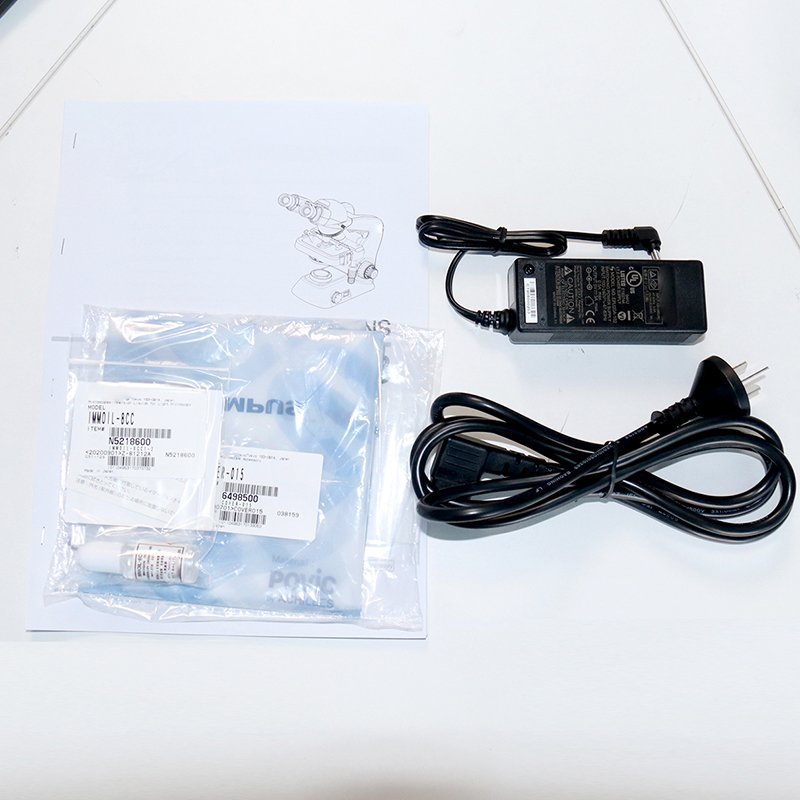
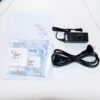
- AC power cable
- User manual
Why Choose CX23
- Plan achromat optics as standard — flat field across FN20 means fewer passes per smear and less refocusing at the edges
- Focus lock and torque release protect objectives and slides in a shared-use practice laboratory
- LED at 0.5 W and 20,000 hours — no bulb stock to hold, no colour shift as the lamp ages
- Under 2 W total draw and 198 × 398 mm bench footprint — no dedicated laboratory bench required
Warranty & Support
FAQ
Which veterinary cytology / histology slides does this microscope read? Routine veterinary cytology smears (FNA, ear cytology, urine sediment), histopathology slides, fecal flotation / direct smear, urinalysis sediment, and hematology (Diff-Quik / Wright-Giemsa stained) workflow.
How long does the LED last? The LED is rated at 20,000 hours and draws 0.5 W. At eight hours a day that is roughly seven years of use. Replacement is a service operation — contact us rather than opening the base.
Can objectives from another microscope be fitted? The CX23 uses an infinity optical system, so objectives computed for a finite tube length will not focus correctly on it. Use objectives specified for this infinity series; the 20× plan achromat (NA 0.4, WD 2.5 mm) is available as an option.
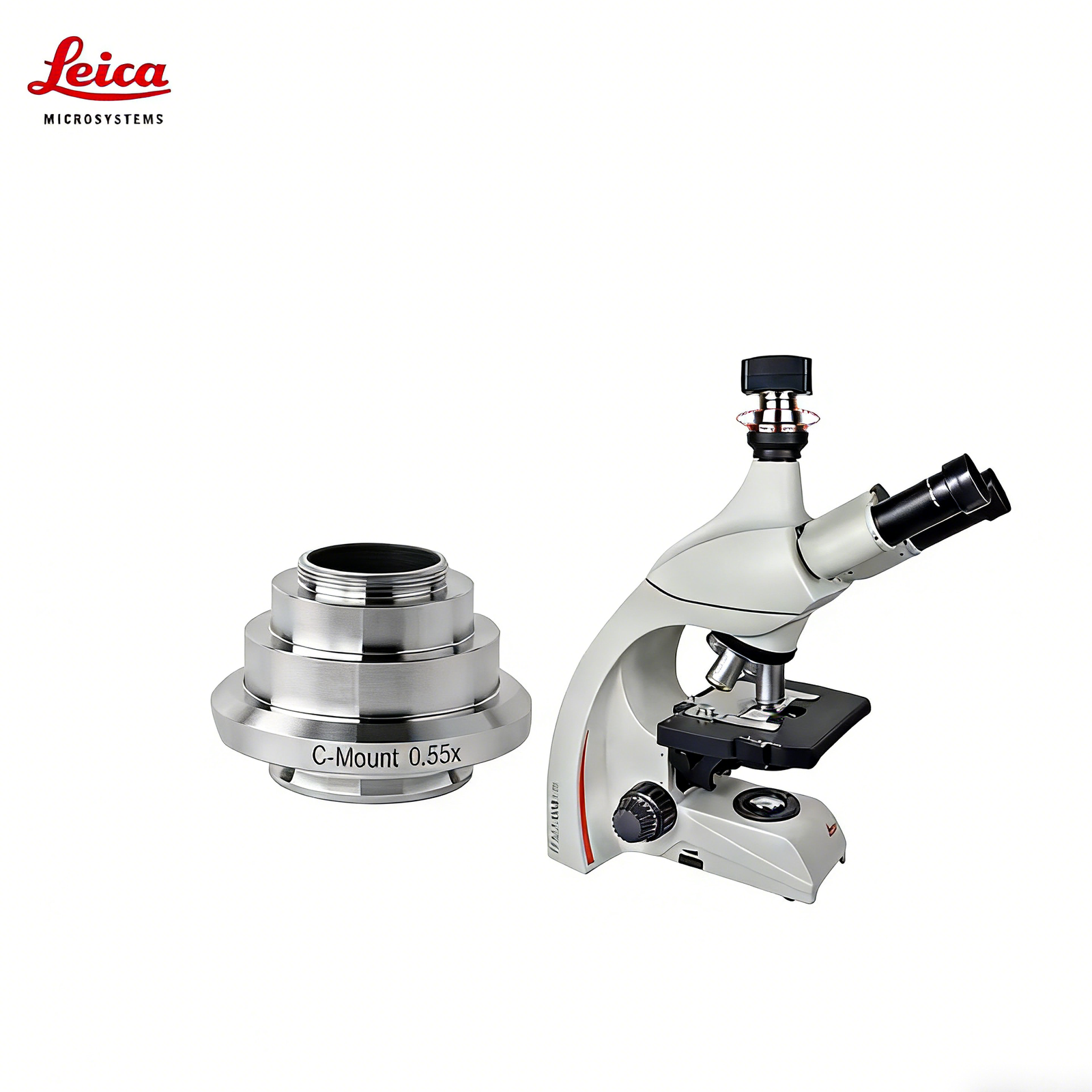
Binocular or trinocular? This listing is the binocular CX23. Choose the trinocular CX23 (CX23RTFS2) if you need to mount a camera for record-keeping or referral images — it has a 100/0 or 0/100 light path selector and shares the same optics.
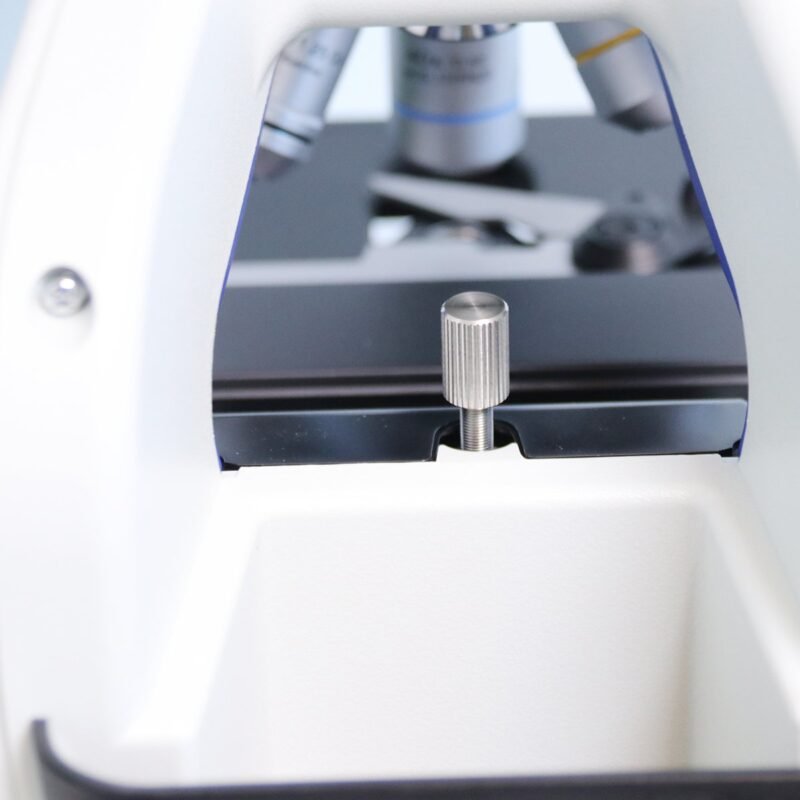
Does it need a dedicated bench or special power? No. It runs on AC 100–240 V, 50/60 Hz, draws under 2 W, occupies 198 × 398 mm of bench and weighs 5.9 kg. The power cable stows in a compartment at the back.
Reviews
There are no reviews yet.