


In-line apnea alarm for intubated veterinary patients, delivering a sound-and-light alert after 15 seconds without a breath.
Product Overview
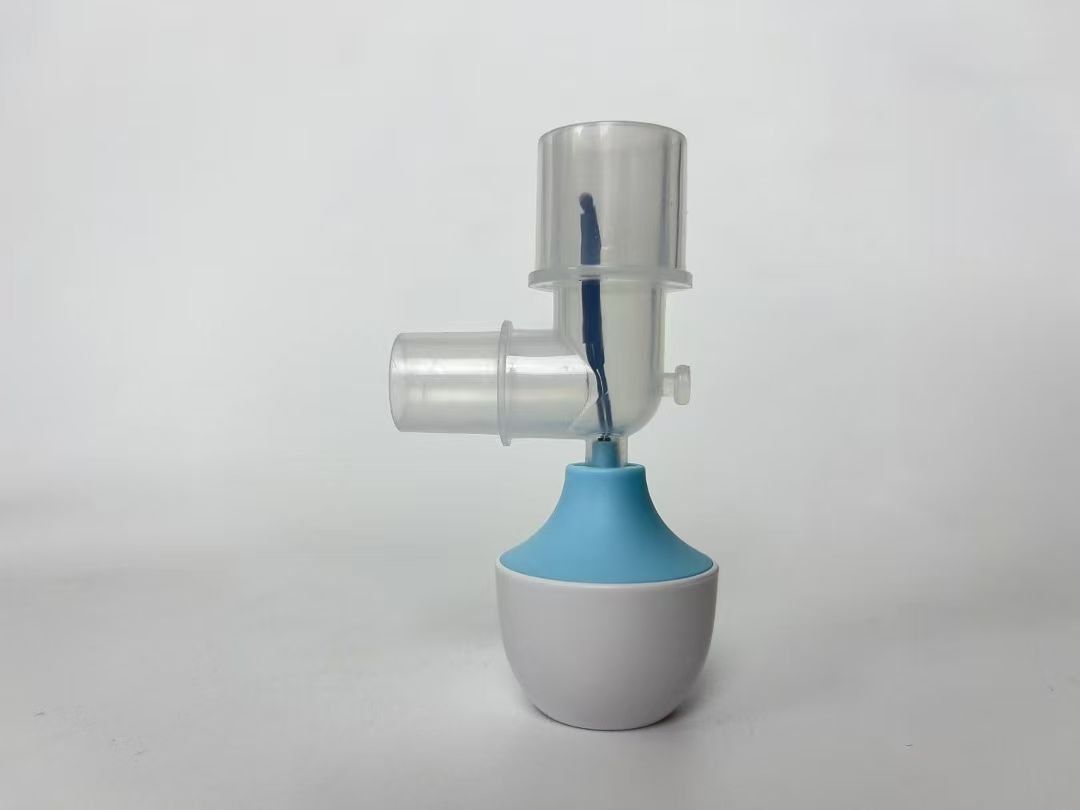
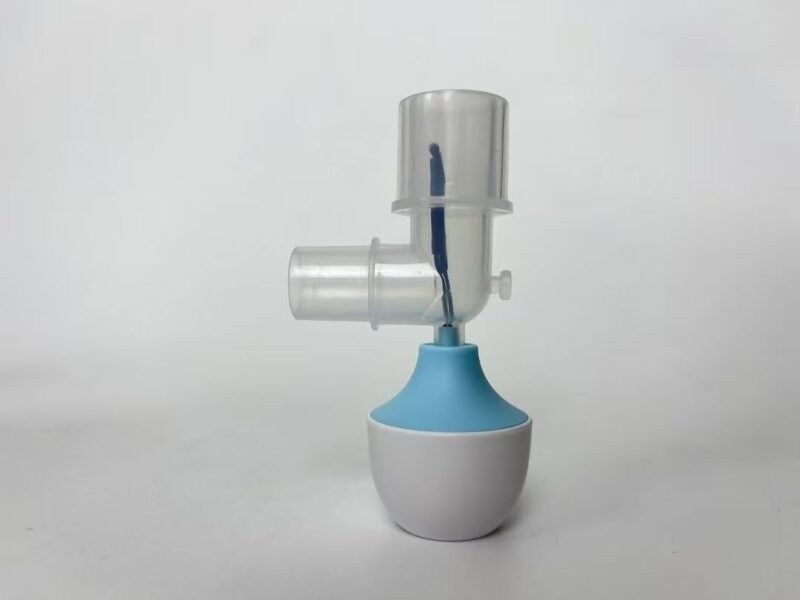
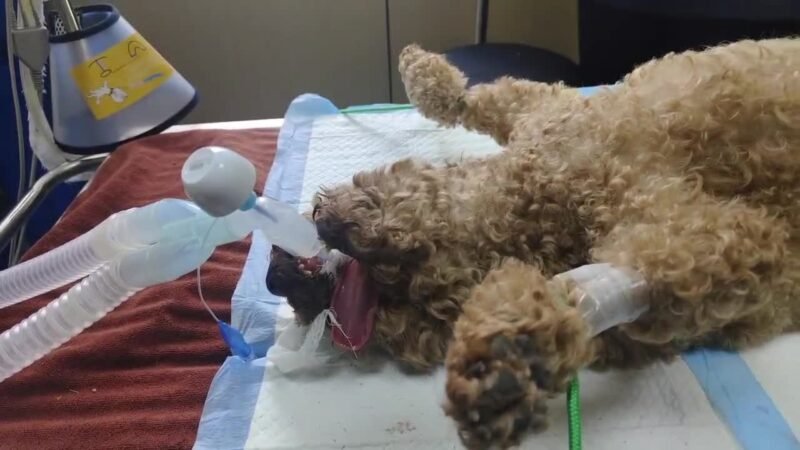
The VBA1 is a compact, self-contained apnea alarm that connects directly between the endotracheal tube and the anesthesia machine breathing circuit. An internal sensor detects each breath passing through the airway adapter; when no breath is detected for 15 seconds, the unit triggers a combined audible and visual alarm.
At 200 g with a built-in rechargeable lithium battery and USB charging, the VBA1 adds a dedicated respiratory safety layer to every anesthetic procedure without cables to a monitor or mains power. It suits general practice surgery, dental procedures, imaging under anesthesia, and recovery of intubated canine and feline patients.
Key Features
- In-line fit: connects between the endotracheal tube and the anesthesia machine circuit with no additional wiring
- 15-second apnea detection: alarm triggers when the patient stops breathing for 15 seconds
- Automatic re-arming: monitoring continues automatically when breathing resumes within the 15-second window
- Dual alarm: audible alarm plus red indicator light
- Infrared touch switch: a single touch on the top button activates the unit once connected
- Auto shut-off: after disconnection or sustained apnea the alarm sounds for 20 seconds, then the unit powers down to conserve battery
- Built-in rechargeable lithium battery with USB charging and red / green charge-status indication
- Compact 140 × 100 × 52 mm body at 200 g — sits on the circuit without dragging on the endotracheal tube
Visual Evidence & Media
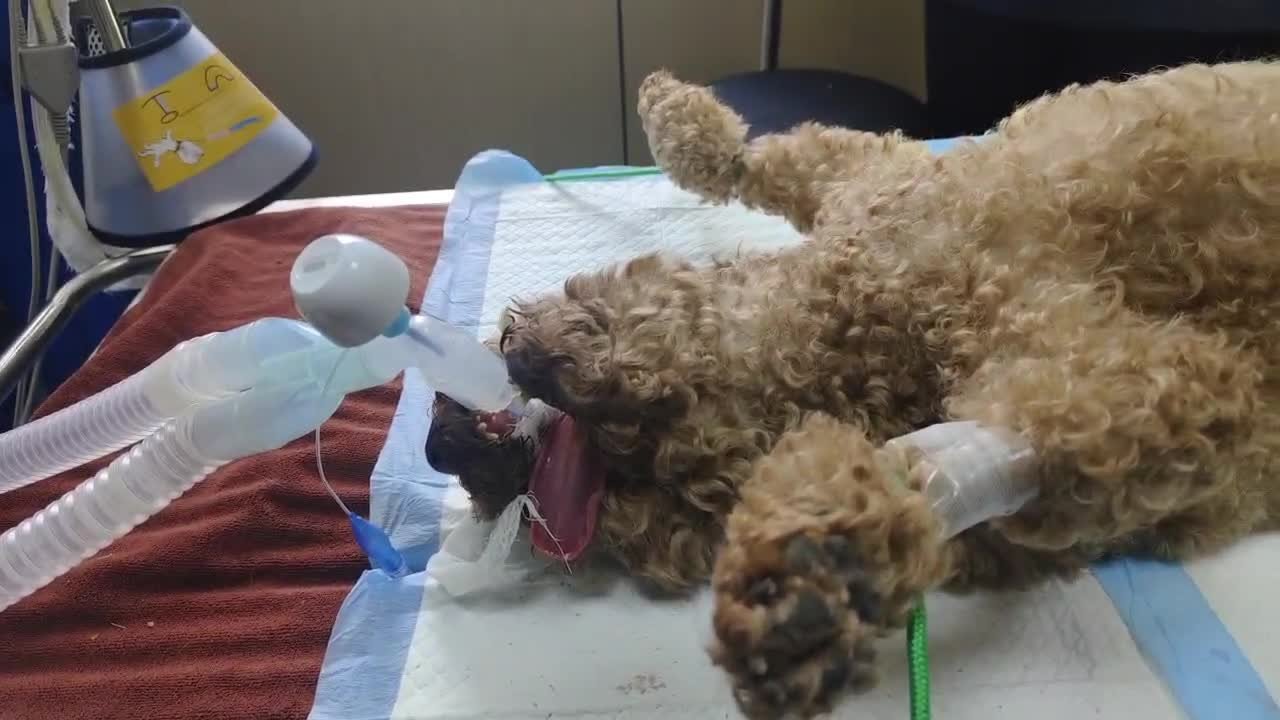

Clinical demonstration: VBA1 monitoring spontaneous breathing of an intubated canine patient under inhalation anesthesia (clip without audio)
Technical Specifications
| Function | Apnea (breathing cessation) alarm for intubated patients |
| Connection | In-line between endotracheal tube and anesthesia machine breathing circuit |
| Apnea Alarm Delay | 15 s without a detected breath |
| Automatic Re-arming | Monitoring resumes when breathing recovers within the 15 s window |
| Alarm Type | Sound and light (dual alarm) |
| Auto Shut-off | After disconnection or cessation of breathing: 15 s pause, alarm sounds for 20 s, then automatic shut-off |
| Switch | Infrared touch switch on top of unit; power on / off |
| Power | Built-in rechargeable lithium battery; USB charging |
| Charge Indication | Red light on while charging; green light on when fully charged |
| Cleaning | Wipe with alcohol after use and dry with a cotton cloth; do not immerse or autoclave |
| Dimensions | 140 × 100 × 52 mm |
| Weight | 200 g |
| Battery Runtime | [TBC] |
| Airway Connector Size | [TBC] |
Clinical Applications
- Apnea surveillance during inhalation anesthesia in canine and feline patients
- Additional respiratory safety layer in practices without capnography on every anesthesia station
- Dental prophylaxis and extraction procedures, where the anesthetist’s attention is split with the procedure
- Diagnostic imaging under anesthesia, where the patient is out of direct view
- Recovery phase monitoring while the patient remains intubated
Workflow & Operating Notes
- Connect the VBA1 between the endotracheal tube and the anesthesia machine breathing circuit
- Touch the top button to activate the unit once connected to the patient
- If the patient stops breathing for 15 seconds, the sound-and-light alarm triggers; monitoring continues automatically once breathing resumes within the 15-second window
- After disconnection from the patient, the unit pauses for 15 seconds, sounds for 20 seconds, then shuts off automatically
- Charging: on USB connection the unit enters start-up mode (red and green lights flash with a short tone), then charging mode — red light while charging, green when full
- Cleaning: wipe with alcohol after each use and dry with a cotton cloth; do not immerse or autoclave
Package Contents
- 1 × VBA1 apnea alarm main unit with airway adapter
- 1 × USB charging cable
- 1 × Instruction leaflet
Downloads & Documentation
Product brochure and user manual are available on request — contact our sales team.
Why Choose the VBA1
- Workflow efficiency: in-line fit with no monitor, cables, or mains power — activate with one touch and proceed with induction
- Clinical accuracy: a fixed 15-second apnea threshold gives an objective alert independent of staff observation of chest excursion
- Practice economics: adds dedicated apnea surveillance to every anesthesia station at a fraction of the footprint of a full monitor
Warranty & Support
Warranty terms for the main unit are confirmed at the time of order. Probes, cuffs, cables and other accessories follow standard wear-item terms.
Frequently Asked Questions
- Where does the VBA1 connect?
- Between the endotracheal tube and the anesthesia machine breathing circuit, so every inspiration and expiration passes through its airway adapter.
- When does the alarm trigger?
- When no breath is detected for 15 seconds. If breathing resumes within the 15-second window, the unit automatically continues monitoring.
- Does it replace a capnograph or multi-parameter monitor?
- No. The VBA1 is a dedicated apnea alarm. It complements, rather than replaces, capnography, pulse oximetry, and other anesthetic monitoring.
- How is it powered and charged?
- By a built-in rechargeable lithium battery charged over USB. The red light indicates charging and the green light indicates a full charge.
- How should it be cleaned between patients?
- Wipe with alcohol after use and dry with a cotton cloth. Do not immerse the unit or sterilize it in an autoclave.
Reviews
There are no reviews yet.