Flexible endoscopy dramatically expands diagnostic and therapeutic capability in small-animal practice — but the upfront investment and learning curve are real. This guide covers the core equipment decisions, which platform to buy first, and what a practical flexible endoscopy workflow looks like.
The core components of a flexible endoscopy system
Every flexible endoscopy setup requires the same four hardware elements:
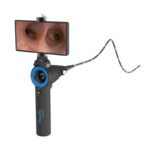
- Endoscope — the flexible insertion tube with integrated camera optics, working channel, and light-guide fibres. Outer diameter and working-channel diameter determine which body cavities and instruments are compatible.
- Light source — high-intensity LED or xenon illumination unit. Modern LED sources require less frequent maintenance than xenon lamps and deliver better colour rendering for HD imaging.
- Camera processor / display — converts raw optical or digital signal into on-screen image. Minimum standard for diagnostic endoscopy is 1080p full HD; 4K processors are available for tertiary and referral work.
- Working-channel instruments — biopsy forceps, cytology brushes, polypectomy snares, and grasping forceps. These are passed through the instrument channel for tissue sampling, foreign-body retrieval, and therapeutic intervention.
Which endoscope to buy first: gastroscope or bronchoscope?
For the majority of small-animal practices, the gastroscope (upper gastrointestinal) generates the highest clinical return per unit of investment. Oesophagoscopy, gastroscopy, duodenoscopy and foreign-body retrieval are among the most commonly requested referral procedures. A 9–10 mm outer-diameter gastroscope with a 2.8 mm working channel handles most canine and large-feline cases; a 7.5–8 mm paediatric scope extends reach to smaller patients.
A bronchoscope — typically 4–5 mm outer diameter — is the second acquisition for practices seeing chronic airway disease, bronchoalveolar lavage cases, or tracheal foreign bodies. Its smaller diameter also makes it useful as a colonoscope in cats and small dogs.
Full HD vs 4K
For diagnostic and therapeutic endoscopy at general-practice level, full HD (1080p) is the practical standard. 4K provides incremental benefit in specialised mucosal pathology work (narrow-band imaging, magnification endoscopy) but does not change clinical outcomes in routine gastroscopy or foreign-body retrieval. Unless your practice sees a high volume of complex cases, full HD delivers excellent image quality at a meaningfully lower cost.
Maintenance and reprocessing
Flexible endoscopes are high-level disinfection (HLD) devices — not sterile instruments. The IFU-compliant reprocessing cycle for a standard gastroscope is 30–45 minutes in an enzymatic pre-soak followed by high-level disinfectant immersion (glutaraldehyde, OPA, or peracetic acid). Endoscope reprocessors automate this cycle and reduce the risk of inconsistent disinfection by manual methods.
Every leak test must be performed before each reprocessing cycle. A single immersion of a scope with a small leak can destroy the endoscope. Budget for leak testing and track test results per scope per case.
LumaVet endoscopy lineup
LumaVet stocks the IWA-HD series full HD flexible endoscopy systems — including gastroscopes, bronchoscopes and matched light sources — and the HDU10/20/30/40 integrated processor/display units. Contact us about paediatric scope sizing and working-channel instrument starter sets.
Looking for veterinary equipment in Thailand? Browse our full lineup at lumavet.com or contact our team at sales@lumavet.com.